Kaltenborn Technique for Low Back Pain: How Gentle Physiotherapy Relieves Stiffness and Pain
Are you struggling with an achy, stiff back that won’t quit? Whether it’s a dull intermittent pain that comes and goes, or a constant discomfort, studies show you’re hardly alone. According to recent estimates, 60-85% of people suffer from some form of low back pain at some point in their lives. The economic impact is equally staggering as the condition costs the Australian health system about $3.4 billion each year.
Fortunately, Physiotherapy for lower back pain offers a wide range of evidence-based, hands-on solutions to choose from, depending on the practitioner’s assessment. One not-so-popular but highly effective method is the Kaltenborn-Evjenth(KEM) method. If more popular physiotherapy methods haven’t quite cut it for you, this gem could be the best manual therapy for your low back pain. We’ll dive into this method in terms of what it’s all about, benefits, and what the scientific evidence looks like.
Let me start by sharing a clinical experience:
A few months ago, a young man in his mid-thirties walked into my office, visibly in pain and moving in short, laboured steps. He’d been battling lower back pain and stiffness for +4 months. He could hardly bend forward to reach his toes, couldn’t reach sideways without turning his whole body, and couldn’t extend his back to look up to the ceiling.
Like most patients with chronic low back pain, he’d been through different treatments, ranging from long sessions of electrotherapy to massage. My physical assessment showed his spinal joints were remarkably stiff and highly irritable. Surprisingly, no proven method was really done to address this before our session.
In terms of treatment, we initially went for traditional manipulation techniques, but he couldn’t tolerate them. They were too painful, so we switched to the more gentle Kaltenborn approach. In 4 sessions, the pain was reduced to intermittent episodes of mild pain, especially after sitting for too long. Here is how it unfolded:
Session 1: Reduced pain with gentle Kaltenborn mobilisations (Grade 1-2).
Session 2: Pain was reduced considerably, by about 50%, so we continued with deeper mobilisations (Grade 2-3) to improve the stiffness.
Session 3: Pain was further reduced to minimal levels, and we continued with the same procedure as the previous session.
Session 4: The pain was gone, and we focused on deep mobilisations to further improve spinal mobility.
Months of misery and uncertainty came to an end, thanks to the KEM approach.
What is the Kaltenborn-Evjenth Method (KEM)?
The KEM is a spinal mobilisation technique that involves gentle mobilisations and stretches to your spinal joints to reduce stiffness and pain. It starts with a careful assessment of the joints to evaluate the nature and extent of joint stiffness. This informs a treatment plan, which uses appropriate mobilisation techniques.
Assessment
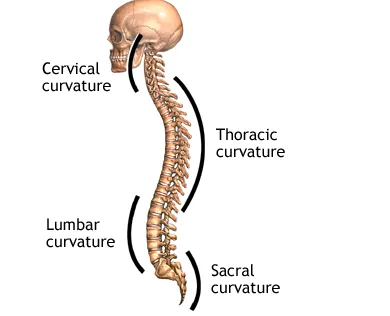
The Physiotherapist applies pressure to tiny joints along the spine, known as facet joints, to assess small movements within the joints.
These tiny movements allow the spine to move in various directions, and they include:
- Gliding: When a bone “slides” along in a joint.
- Traction: Two bones moving away from each other.
These movements are graded using a standard grading scale based on range and how they “feel”.
Treatment
Treatment involves skilful application of manual force to deal with stiffness and reduce pain. Key treatment techniques include:
- Gliding: Gentle movements aimed at improving the “sliding” of spinal joints.
- Traction: Gentle separation of spinal joints to reduce pressure and stretch surrounding structures.
These movements are also graded based on range, and each grade can be used to achieve different results.
- For instance, Grades 1-2 involve small movements aimed at reducing pain and maintaining available range of motion. In case you’re wondering how this is possible, these movements stimulate special sensory cells called mechanoreceptors in the joint’s surrounding structures. This triggers a series of mechanical nerve signals to the spinal cord, which further blocks transmission of pain from the affected area.
- Grade 3 and 4 movements are used to break restrictions and increase the range of movement in the affected joints.
Scientific Evidence Supporting the Kaltenborn Method-Evjenth
Is It Really Effective for Low Back Pain?
The Kaltenborn method has gained a nod of approval from the scientific community over the years. It is a proven strategy for those in need of back pain treatment for surgery.
- 2023 Study in the Journal of Health and Rehabilitation Research: The Kaltenborn Method showed superior results compared to conventional methods after 4 weeks of treatment in 120 patients. This was based on pain scale ratings, spinal range of movement, and disability ratings on standard functional outcome measures.
- 2017 research in the Journal of Rehabilitation Science: Outperformed Kinesiotherapy in reducing pain and improving spinal movement.
The Kaltenborn approach proves an effective treatment technique from both a theoretical and practical standpoint. The research is there, showing it is an equally effective option to other, more popular physiotherapy and medical treatment approaches. If you’re suffering from low back pain, just know that physiotherapy has a wide range of treatment options that can help you deal with the pain and get back to the things you love to do with no setbacks.
Looking to get rid of your back pain? At Healthy Movements Physiotherapy, we are committed to providing highly effective, evidence-driven manual therapy methods like the Kaltenborn technique to help you feel and move better.
Ready to get started towards a pain-free version of you? Hit the “make an appointment” button above, or call us today to schedule a consultation with our Physiotherapists.
Frequently Asked Questions (FAQs) AboutKaltenborn Technique
A: The Kaltenborn technique is a manual therapy method that uses gentle spinal mobilisations to reduce joint stiffness, improve movement, and ease back pain.
A: No, it is a gentle approach designed to relieve pain without causing additional discomfort, making it ideal for patients with irritable or highly sensitive back conditions.
A: The number of sessions varies based on your individual condition, but many patients experience significant relief within 4–6 sessions.
A: Yes, it is especially useful for chronic or long-standing back pain where joint stiffness plays a role in limiting movement and causing discomfort.
A: Unlike high-velocity manipulations that involve quick, forceful movements (“clicking” sounds), the Kaltenborn technique uses slow, graded mobilisations that are gentle, controlled, and specifically targeted to problem areas.